Systems & Frameworks
How do we do it?
The 3 Core Offerings — Productivity & Cost Improvement, TQM Deployment, and Strategic HR & Leadership Development — define the Strategic "WHAT" of P3's value offering.
The following explains the "HOW" — the Toolkits, Systems, and Proprietary Frameworks that convert these offerings into predictable, repeatable & scalable outcomes. These are structured, battle-tested systems & methods to help organizations achieve sustainable results.
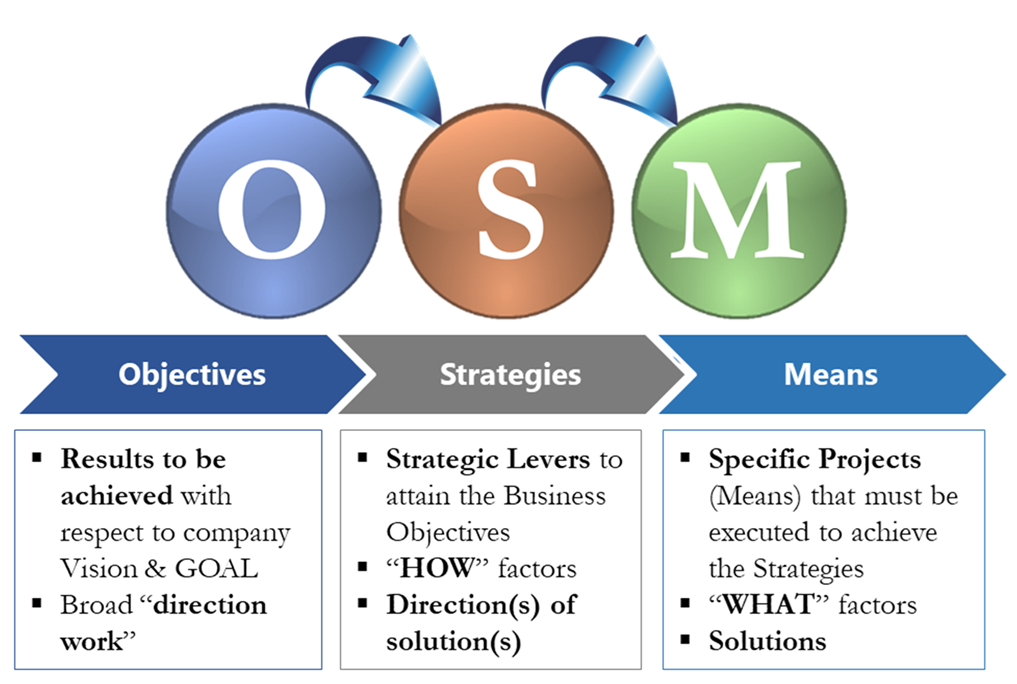
OSM© – Strategy Deployment Framework
Objectives – Strategies – Means
A Strategy Deployment system to connect Mission → LTP → ABP → KPIs → Daily Work Management
- Aligns boardroom to shopfloor — helps visualise complete Strategy Deployment.
- Facilitates Vision-Mission-Values workshops and LTP (Long-term Plan) formation.
- Drives ABP — with KPI trees cascaded to last levels, with Tracking & Review Forums.
- Catch-ball communication to create employee ownership of Targets.
Strategy becomes Action, Roles are Clear, and Results are Predictable.
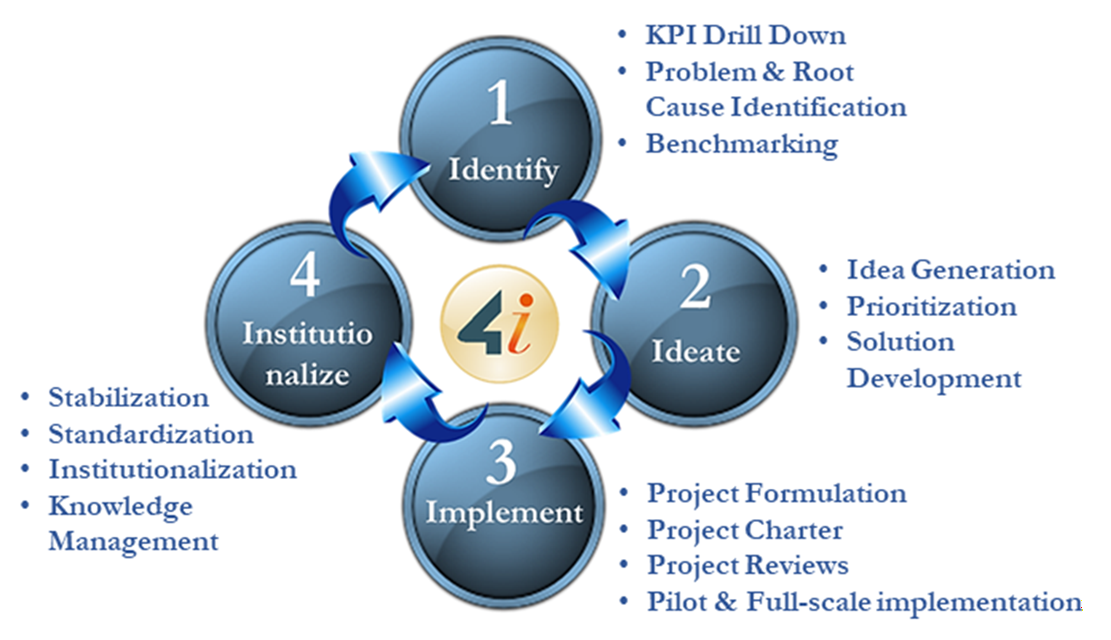
4i© – Problem Solving & Execution Methodology
Identify ▸ Ideate ▸ Implement ▸ Institutionalize
A structured problem-solving and improvement engine for Quality, Cost, and Delivery Improvement.
- Designs & Develops a Continuous Improvement System across the organization.
- Establishes a data-driven and Kaizen culture at the Shop-floor.
- Trains Leaders on Strategic & Analytical Problem-solving Tools.
- Executes Projects for results with Cross-functional Project Charters and structured ownership.
Breakthrough Improvements + a Culture of Continuous Improvement.
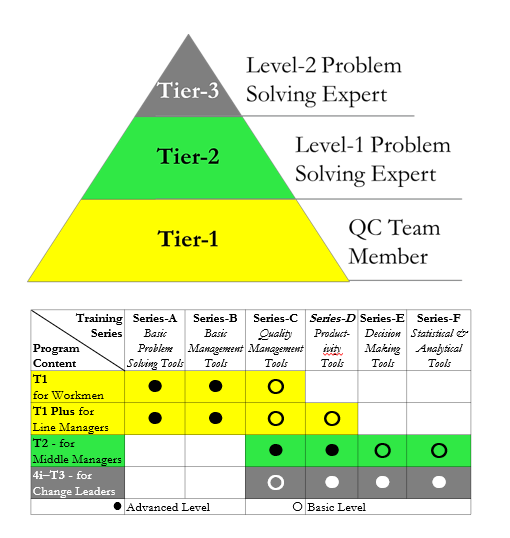
T1–T2–T3© – Capability Building Framework
Skill ▸ Competency ▸ Leadership Behaviour
A 3-tiered Capability Building System that builds functional, managerial, and leadership capability — covering all levels of the Organization.
- Creates a 3-Tier Capability Development — from Leadership to Frontline: Skill → Workmen, Competency → Managers, Behaviour → Leaders.
- Provides a complete Capability Building Solution for the entire organization.
- Provides specific Analytics Tool-kits for Problem Solving Tasks at each level.
- Embeds Problem Solving Methods & Tools across all levels of the hierarchy.
Improved People Capability across Levels: Skill (Workmen), Competency (Managers), Behaviour (Leaders). A workforce that solves complex & cross-functional problems.
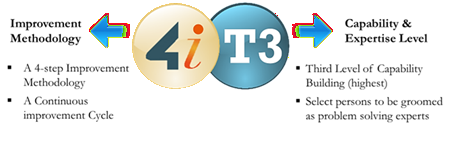
4i-T3 Program© – a part of T1–T2–T3
A transformation journey for developing Analytical Change Leaders.
Ambidextrous development: Personal Growth + Execution & Analytical Capability — simultaneously.
- Ambidextrous approach: Works on a) Personal development + b) Execution & Analytical Capability — together.
- Develops Execution Capability and Analytics with KPI-based Live Breakthrough projects.
- Develops Personal Attributes through Live Individual Development Plan (IDP) with structured reviews & coaching.
Develops Change Leaders for Succession into High Impact Roles.
5D© – Leadership Capability Assessment Model
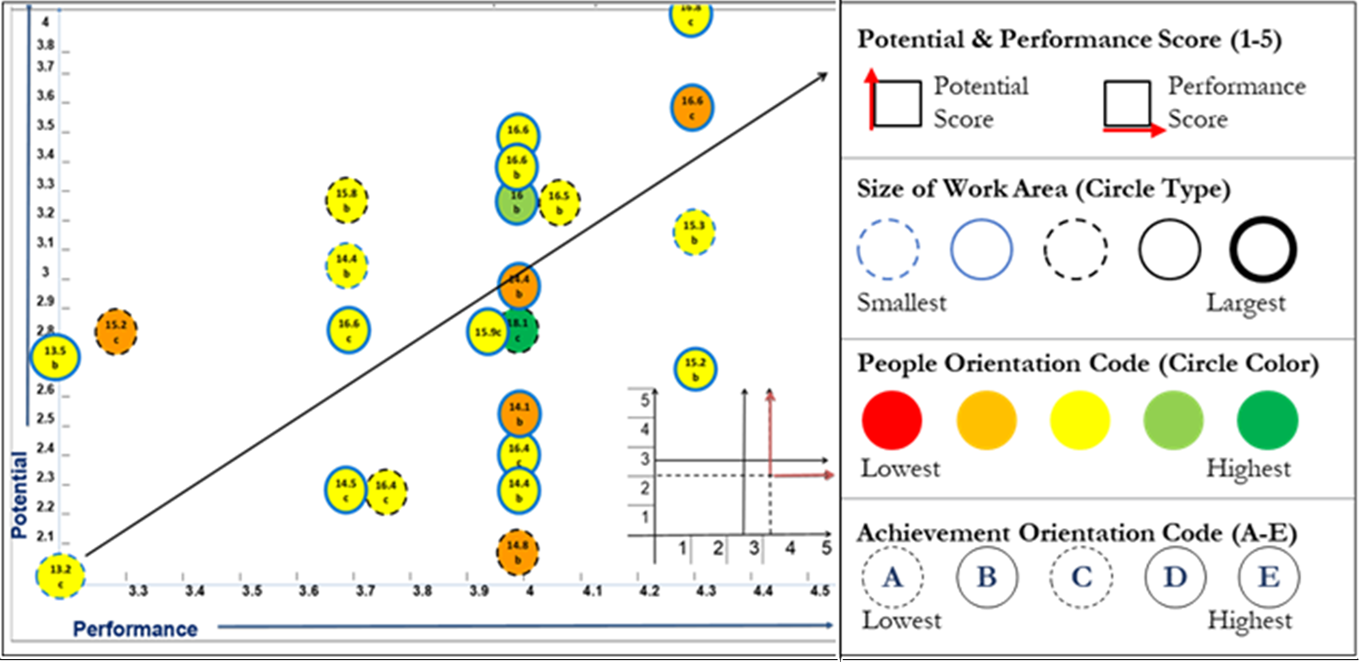
Evaluation of Performance, Potential, and Promise.
Objective, data-driven leadership analytics across 5 dimensions.
- Develops Objective Leadership Behaviour Analytics across 5 distinct Attributes.
- Identifies the Future Fit Leaders based on data analytics and behavioural patterns.
- Creates Succession & Role Fitment clarity for identified leaders.
- Maps Leaders to High-Impact Roles to create targeted Individual Development Plans (IDPs).
Maps Leadership talent bench-strength aligned to both Company values & growth plans.
0757© – Shopfloor Excellence System
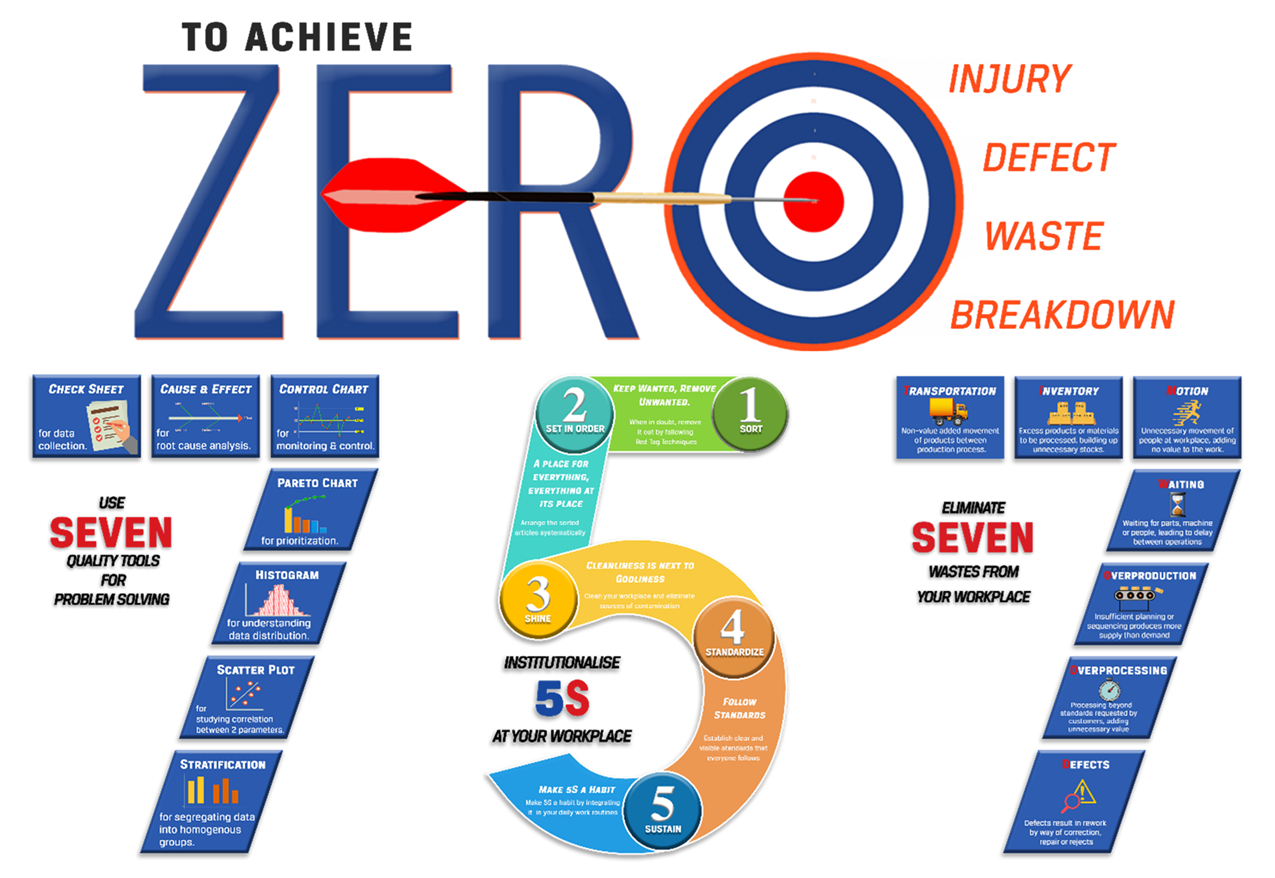
"0 Injury, 0 Defect, 0 Waste, 0 Breakdown" culture at the shop-floor.
A Shop-floor Excellence System that uses employee engagement to improve productivity, quality, safety, discipline, and ownership.
- 0 – Zero-loss culture: Takes up improvement projects and Kaizens aimed at reaching "0 Injury, 0 Defect, 0 Waste, 0 Breakdown".
- 757 – Uses 7 QC tools to problem-solve, implements 5S, and targets removal of all 7 types of wastes through Kaizens.
- Creates employee participation at shopfloor grass-root levels, embedding Kaizen & Continuous Improvement culture.
Develops a High Reliability, High Capability Shopfloor connected to business results.
8S© – Employee Engagement System
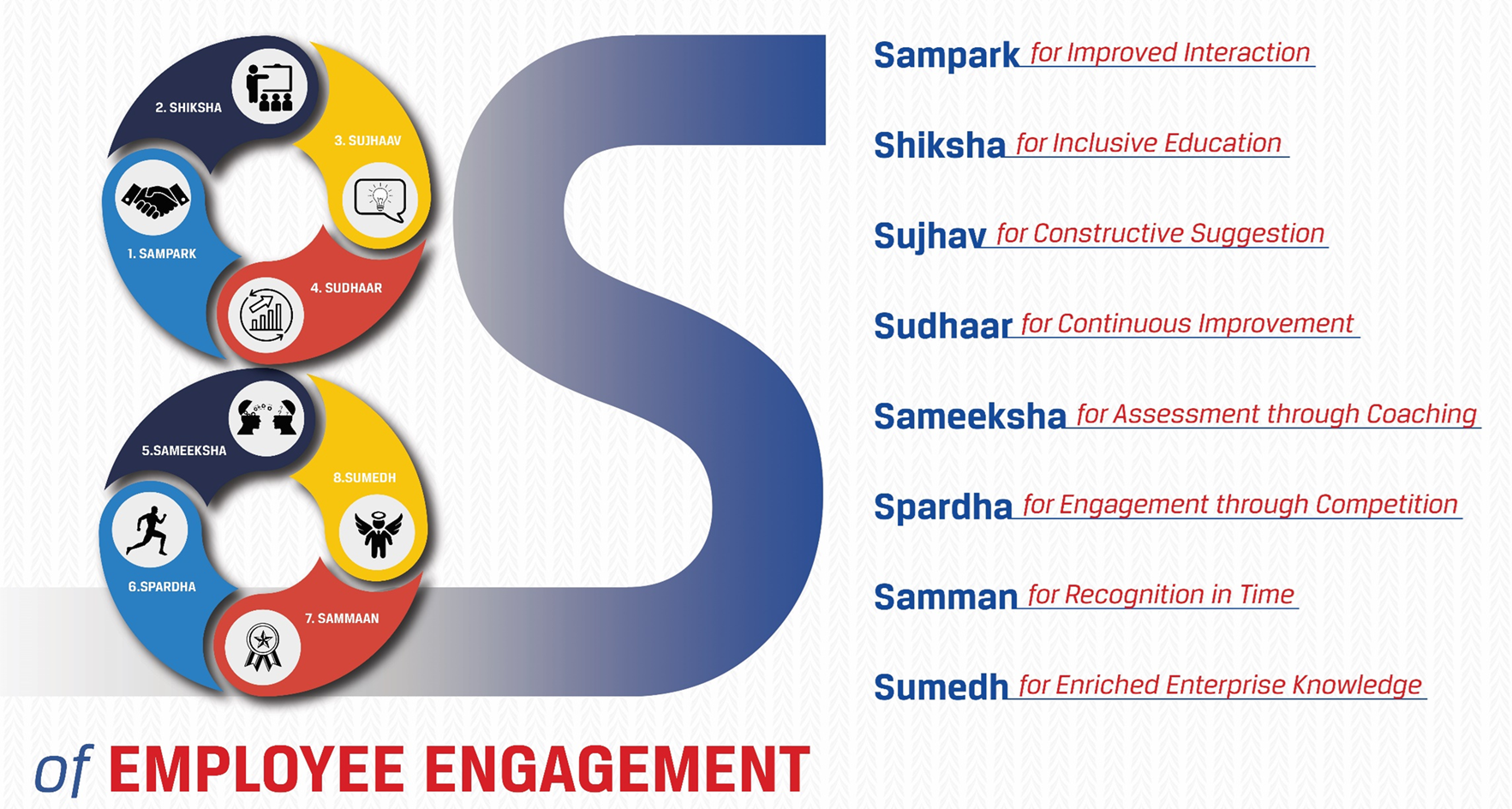
Communication → Capability → Contribution → Celebration
A structured engagement architecture linking employee communication, capability, contribution, and celebration of success.
- Carries out surveys to assess employee engagement & culture issues.
- Identifies Engagement Elements and metrics to be worked upon.
- Addresses basic elements of Engagement: Communication, Learning & Development, Empowerment, Rewards & Recognition.
- Develops forums for Capability building & coaching, managing Suggestions and Kaizens, and Rewards & Recognition Systems.
- Institutionalises Knowledge Management Systems across the organization.
High-ownership, high-energy, learning culture.
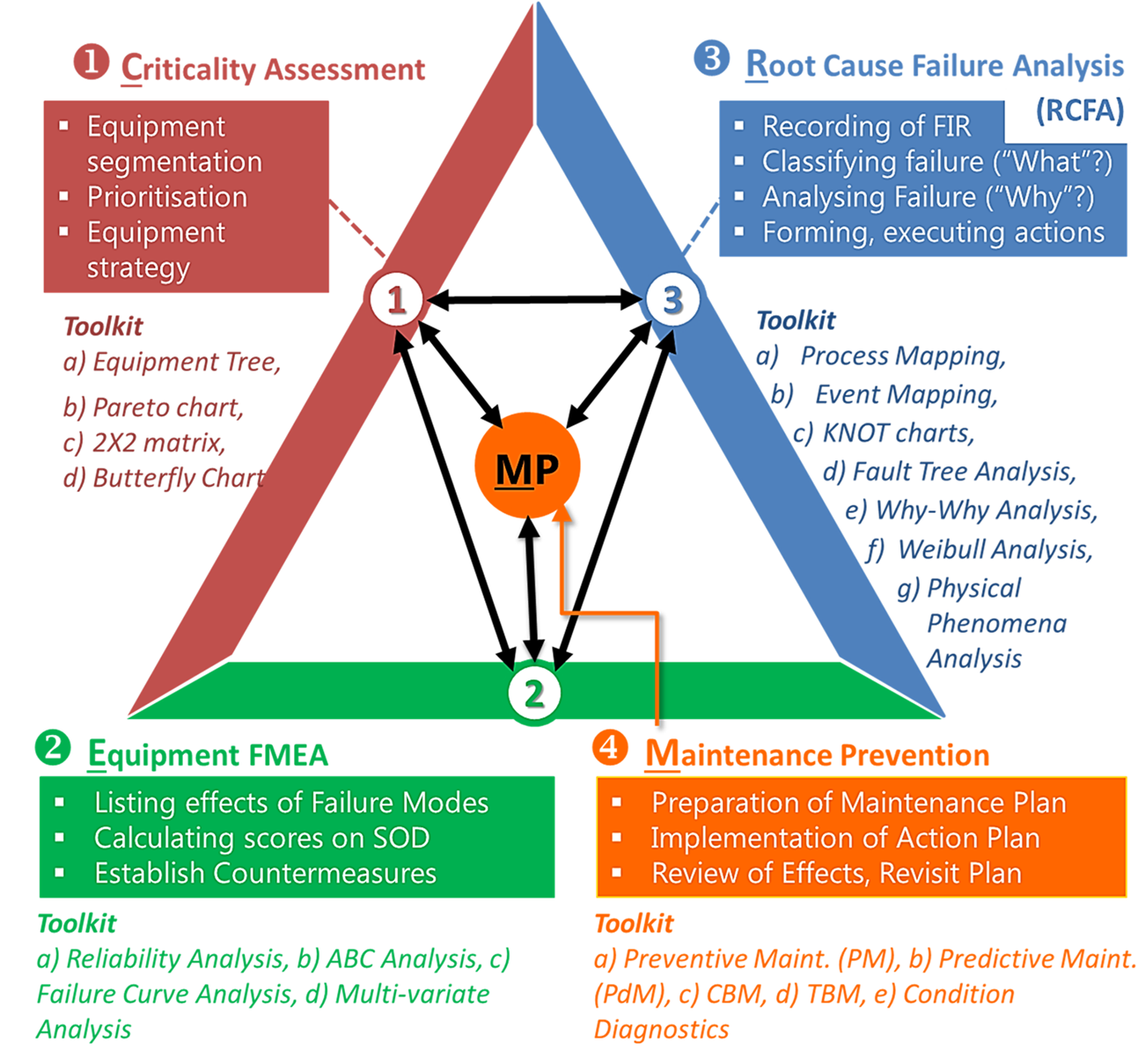
CERM© – Reliability Excellence Framework
A closed-loop Asset Reliability improvement & governance Framework for Manufacturing Plants.
CERM runs Live MTBF and MTTR Improvement Projects.
- Moves the team from an "Availability" mindset to a "Reliability" mindset.
- Establishes a Zero-failure approach with Maintenance Managers & Technicians through coaching on Equipment Criticality Analysis, EFMEA, and RCFA.
- Facilitates Live MTBF and MTTR Improvement Projects with structured governance.
Predictability of Asset Performance, Higher Uptime & Safety, Lower Maintenance Cost.